
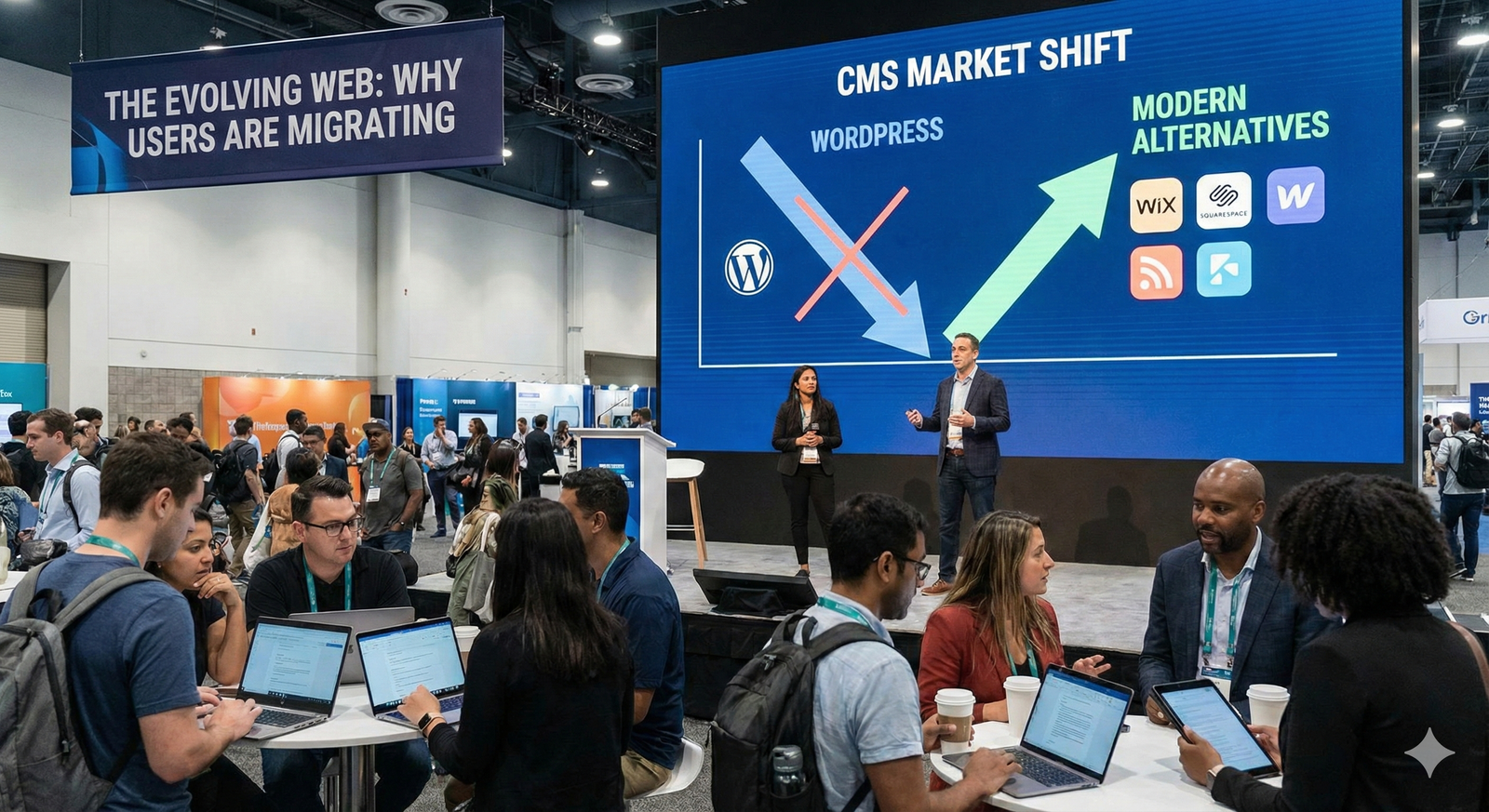
Introduction: Why Are People Moving Away from WordPress?
For nearly two decades, WordPress dominated the website-building world. It powered blogs, online stores, agency websites — even Fortune 500 company sites. But over the past few years, something has changed:
👉 More businesses, agencies, freelancers, and course creators are moving away from WordPress.
Why?
Because the digital landscape has evolved — and so have customer expectations. Today’s business owners don’t just need a website; they need:
- Landing pages
- Funnels
- Email marketing
- Automation
- CRM
- Online course hosting
- Membership sites
- A/B testing
- Payment processing
And with WordPress… that means multiple plugins, multiple costs, constant updates, security threats, and endless tech maintenance.
Table of Contents
This is why people are turning to simpler, no-code, all-in-one platforms like Systeme.io, GoHighLevel, ClickFunnels 2.0, Wix, and Shopify.
This article explains exactly why WordPress is losing users, with expert insights, real-world examples, and a full comparison of modern alternatives — especially Systeme.io, one of the fastest-growing all-in-one marketing platforms.
1. The Modern User’s Pain Points: Why People Are Leaving WordPress
Here are the real reasons businesses are switching to WordPress alternatives today.
1.1 WordPress Has Become Too Complex for the Average User
WordPress started as a simple blogging tool. Today, it’s a massive ecosystem requiring:
- Plugins for SEO
- Plugins for forms
- Plugins for funnels
- Plugins for backups
- Plugins for course hosting
- Plugins for automation
- Plugins for payments
It’s not unusual for a business website to run 20–50 plugins.
The problem?
Each plugin:
- Requires updates
- May break during updates
- Can conflict with others
- Needs configuration
- Often comes with extra costs
For non-tech users, it feels like operating a machine with 50 moving parts — and one wrong update can break everything.
1.2 High Maintenance: Updates, Conflicts & Fixing Breakdowns
With WordPress, you must maintain everything yourself:
- Theme updates
- Plugin updates
- PHP updates
- Database cleanup
- Spam protection
- Debugging
- Backups
- SSL
- Hosting performance
Most business owners don’t have time or technical skill for this. Agencies also waste hours troubleshooting instead of focusing on growth.
With all-in-one platforms, updates happen automatically and nothing breaks.
1.3 Security Risks & Vulnerable Plugins
WordPress is open-source and extremely popular — which also makes it a target.
Data from security firms show:
Over 90% of hacked CMS websites are WordPress.
And the #1 cause of hacks?
👉 Outdated or vulnerable plugins.
Many small businesses don’t even know their site has been compromised until it’s too late.
1.4 WordPress Isn’t Truly an All-in-One System
To run a modern online business, you need tools like:
- CRM
- Funnels
- Email marketing
- Hosting
- Membership sites
- Automation
- A/B testing
- Analytics
- Payments
WordPress alone doesn’t provide this. You must integrate:
- Elementor / Divi
- WooCommerce
- Thrive Themes
- ActiveCampaign / Mailchimp
- LearnDash / Teachable
- Zapier
- Stripe plugins
- Security plugins
- Backup plugins
With each plugin comes:
- More cost
- More complexity
- More maintenance
- More tech headaches
All-in-one tools like Systeme.io eliminate all this.
1.5 Hidden Costs Make WordPress More Expensive Than Expected
People think WordPress is cheap.
Actually? Not anymore.
Here’s what a realistic WordPress setup costs:
| Feature | Typical WordPress Cost (per year) |
|---|---|
| Hosting | $120–$600 |
| Theme builder (e.g., Elementor Pro) | $59–$199 |
| SEO plugin | $99 |
| Security plugin | $99 |
| Backup plugin | $60 |
| Email marketing tool | $200–$1,000 |
| Course plugin | $199–$399 |
| Funnel builder | $199+ |
| CRM | $300–$1,500 |
👉 Total: $1,000–$4,000+ per year
Meanwhile…
Systeme.io: Starts FREE
Paid plans: $27–$97/month
Includes EVERYTHING.
1.6 Slow Speed Hurts SEO & Conversions
Most WordPress sites load slowly because of:
- Too many plugins
- Heavy page builders
- Cheap hosting
- Unoptimized scripts
Google’s Core Web Vitals updates hurt slow sites — and WordPress sites often fail these tests.
All-in-one platforms (like Systeme.io) are optimized for high-speed, conversion-focused performance.
1.7 Agencies Need Scalable Systems — WordPress Isn’t One
Agencies today want:
- White-label solutions
- Client management
- CRM
- Repeatable templates
- Automation
- Lead nurturing systems
WordPress requires constant manual work, making it hard to scale agency operations.
Tools like GoHighLevel and Systeme.io are built specifically for:
- Agencies
- SaaS builders
- Marketers
- Course creators
- Freelancers
WordPress simply can’t compete with these modern needs.
2. What People Are Switching To Instead of WordPress
Here are the top platforms people are choosing:
2.1 Systeme.io (Fastest-Growing WordPress Alternative)
Why users love Systeme.io
- 100% beginner-friendly
- All tools included
- Affordable
- No plugins
- No updates
- No security risks
- No complicated integrations
- Unlimited funnels
- Unlimited emails
- CRM built in
- Course hosting
- Membership sites
- Automation workflows
👉 Try Systeme.io Free
https://systeme.io/?sa=sa0106705984b7e20123df6b87229ba5d7396d880c

2.2 GoHighLevel (For Agencies & SaaS Builders)
GoHighLevel is more advanced than WordPress for businesses that need:
- CRM
- Lead management
- White-label client accounts
- SaaS mode
- Automation
- Pipelines
- Unlimited contacts
Many agencies are switching from WordPress to GoHighLevel because it provides everything under one roof.
2.3 Shopify (E-commerce Sellers)
Shopify is taking e-commerce users away from WooCommerce because:
- It requires zero setup
- No hosting issues
- No plugin conflicts
- High-speed mobile optimization
- Better support
2.4 Wix & Squarespace (For Simple Websites)
These platforms attract individuals and small businesses that want:
- Zero maintenance
- Drag-and-drop simplicity
- Stylish templates
3. WordPress vs Systeme.io: Detailed Feature Breakdown
| Feature | WordPress | Systeme.io |
|---|---|---|
| Hosting | Not included | Included |
| Funnel Builder | Requires plugins | Built in |
| Email Marketing | Requires external tools | Built in |
| CRM | Not included | Built in |
| Course Hosting | Plugins required | Built in |
| Automation | Requires other tools | Built in |
| Security | You handle it | Handled for you |
| Maintenance | High | Zero |
| Cost | High & unpredictable | Low & predictable |
| Learning Curve | Steep | Beginner-friendly |
4. Pros & Cons of WordPress vs All-in-One Platforms
4.1 Pros of WordPress
- Full customization
- Thousands of plugins
- Open-source flexibility
- Ideal for developers
- Strong blogging capabilities
4.2 Cons of WordPress
- Requires constant maintenance
- Security vulnerabilities
- Plugins often break
- Hidden costs stack up
- Not beginner-friendly
- Not an all-in-one solution
- Slow without optimization
- Difficult to scale for agencies
4.3 Pros of Systeme.io
- Free forever plan
- All tools in one platform
- No plugins
- No updates
- Drag-and-drop simplicity
- Strong email deliverability
- Built-in funnels
- Built-in automation
- Built-in CRM
- Built-in course platform
- Super affordable
4.4 Cons of Systeme.io
- Not ideal for highly custom-coded sites
- Simpler designs compared to Elementor
- Less developer-focused
5. Pricing Comparison
WordPress Annual Cost (Realistically):
$1,000–$4,000+
Systeme.io Pricing:
- Free Plan – $0
- Startup – $27/month
- Webinar – $47/month
- Unlimited – $97/month
👉 Try Systeme.io Free:
https://systeme.io/?sa=sa0106705984b7e20123df6b87229ba5d7396d880c
Systeme.io is clearly the most cost-efficient.
6. FAQs: Why People Are Leaving WordPress
1. Is WordPress still good in 2025?
Yes — for developers, large custom websites, or blogs. But for the average business owner, it’s too complex.
2. What is the biggest reason people switch from WordPress?
They want an all-in-one system instead of managing dozens of plugins and hosting issues.
3. Is Systeme.io better than WordPress?
For most businesses, yes — because it’s simpler, safer, and includes all marketing tools.
4. Is WordPress still the best for SEO?
WordPress has strong SEO capabilities, but slow speed and plugin conflicts can hurt rankings. All-in-one systems are optimized automatically.
5. Is it hard to move away from WordPress?
No. Systeme.io, GoHighLevel, and others allow easy migration from:
- Pages
- Funnels
- Courses
- Email lists
7. Conclusion: Should You Leave WordPress?
If you’re a digital marketing agency, freelancer, coach, course creator, or small business owner, the answer is becoming clear:
👉 Yes — WordPress is no longer the easiest or most efficient choice.
Modern platforms like Systeme.io give you everything under one roof:
- Funnels
- Websites
- Email marketing
- CRM
- Automation
- Memberships
- Digital products
- Payments
No plugins.
No updates.
No hosting headaches.
No security risks.
This is why thousands are moving away from WordPress — and why you may want to consider it too.
Ready to Try a Simpler, All-in-One Alternative?
Start your free Systeme.io account today.
👉 Free Trial Link:
https://systeme.io/?sa=sa0106705984b7e20123df6b87229ba5d7396d880c